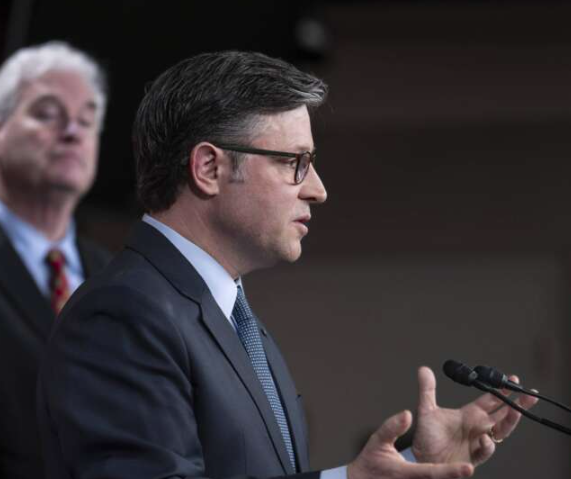
The US House of Representatives has voted down a funding measure backed by Donald Trump, pushing the government closer to a shutdown this weekend. The revised spending plan failed to secure the required two-thirds majority in Congress, with 38 Republicans joining Democrats to block the bill on Thursday night.
Key Points:
A Divided Congress Blocks Funding Plan
Trump had previously derailed a bipartisan funding agreement crafted by Republican House leadership and Democrats following criticism from tech billionaire Elon Musk. The latest vote failed by 174 to 235, leaving Republican House Speaker Mike Johnson scrambling to devise a new plan before government funding expires at midnight Friday.
The Controversial Trump-Approved Bill
The proposed bill aimed to tie government funding to a two-year suspension of the federal debt limit, a cap on government borrowing. Republicans opposing the measure cited concerns over increased spending, while Democrats argued it would prioritize tax cuts for the wealthy.
Understanding the Impending Shutdown: Five Key Insights
1. How Did We Get Here?
The path to a potential government shutdown began in September, when a budget deadline loomed. Speaker Johnson’s attempt to pass a six-month funding extension was thwarted, primarily due to Democratic opposition to provisions like the SAVE Act, which required proof of citizenship for voting.
Congress eventually passed a short-term funding bill expiring December 20. However, Johnson pledged to avoid another rushed spending package before the holidays. The latest bill, unveiled just three days before the recess, spanned 1,547 pages and included:
- $110 billion for disaster relief.
- $30 billion for farmers.
- Pay raises for lawmakers.
- Funding for infrastructure repairs, healthcare reforms, and consumer protection measures.
Johnson’s inclusion of these provisions drew criticism from Republicans, who viewed them as concessions to Democrats. Johnson defended the bill, citing unforeseen circumstances, like natural disasters, as justification.
2. Trump and Musk Oppose Bipartisan Deal
The spending plan faced mounting opposition after Musk, an influential figure tapped by Trump to identify spending cuts, criticized the bill heavily on X (formerly Twitter). Musk’s posts, often containing misinformation, galvanized resistance among Republicans.
Trump and incoming Vice President JD Vance issued a joint statement denouncing the bill’s Democratic-backed provisions. They demanded a stripped-down version focused solely on temporary spending and disaster relief.
3. What’s Next?
Following Thursday night’s defeat, lawmakers have less than 24 hours to avert a shutdown. Johnson criticized Democrats for rejecting the proposal but acknowledged the need for bipartisan support.
Democrats, however, accused Johnson of reneging on previous agreements, with House Minority Leader Hakeem Jeffries stating, “You break the bipartisan agreement, you own the consequences.” The growing influence of Musk also drew sharp criticism from Democratic lawmakers.
4. Effects of a Government Shutdown
A shutdown would disrupt non-essential federal services. Key consequences include:
- Essential operations, like border protection and air traffic control, continuing without pay.
- Social Security and Medicare payments proceeding, but delays in benefit verification.
- Temporary suspension of food safety inspections, environmental monitoring, and National Park operations.
5. Political Repercussions for Republicans
This marks a critical test of Trump’s sway over congressional Republicans and Speaker Johnson’s leadership. Johnson faces potential challenges to his speakership when the House votes in 15 days. Several Republicans have signaled they may withdraw support, jeopardizing his position amid the party’s narrow majority.
Johnson’s leadership struggles mirror the party’s recent instability, highlighted by Kevin McCarthy’s ousting as Speaker earlier this year.