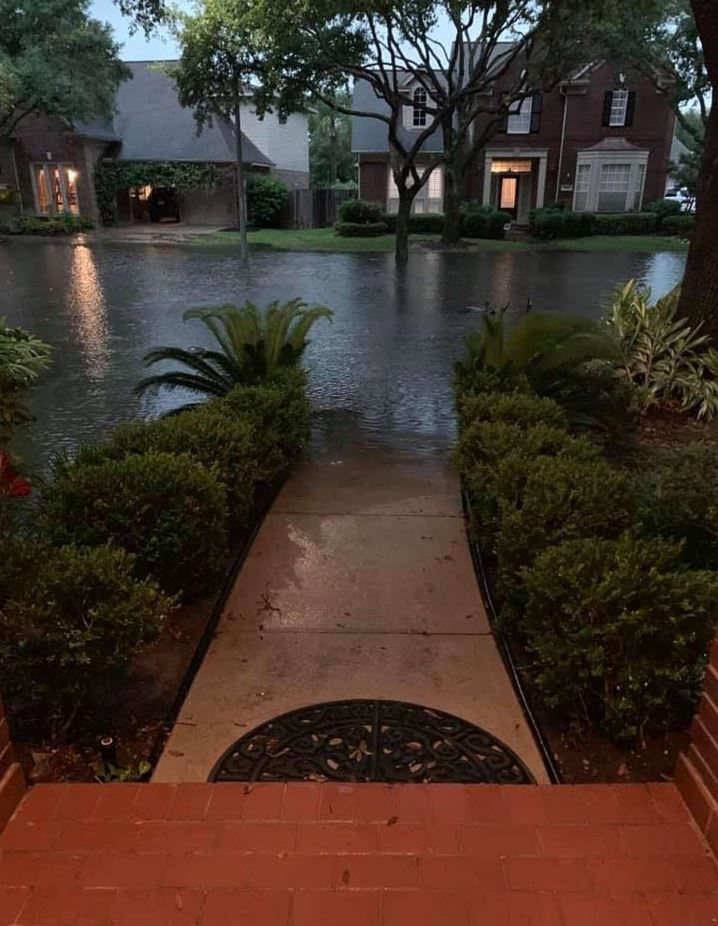
Houston is once again dealing with heavy rain and the risk of localized flooding, raising a familiar question for residents: why do some neighborhoods flood so quickly even when the entire city is not facing a major flood event?
Heavy rainfall overnight has increased the risk of street flooding in parts of west and northwest Houston. Some locations, including areas around Becker Road and Little Cypress Creek, received nearly 8 inches of rain in 24 hours. The National Weather Service has a Flood Watch in effect through Friday evening for Houston and surrounding areas.
A Flood Warning is also in effect for South Mayde Creek near Greenhouse Road, where minor flooding is occurring. The National Weather Service warns that if water levels rise further, parts of Greenhouse Road, Saums Road and Cullen Park could be affected.
More rain is possible over the weekend, particularly toward coastal areas and along the I-10 corridor. Forecasts call for additional showers and thunderstorms, with some areas potentially receiving several more inches through early next week.
Why does Houston flood so easily?
Houston’s flooding problem is not caused by one thing.
The city relies on a combination of major bayous, rivers and channels, along with storm sewers and roadside drainage ditches to move rainwater away from neighborhoods. Houston Public Works says its Stormwater Master Plan evaluates these systems and identifies areas where additional flood-mitigation work may be needed.
When rainfall is intense, however, drainage systems can be overwhelmed. Areas that receive repeated heavy rain can become particularly vulnerable because the ground and drainage channels have less capacity to absorb or move additional water.
That is why flooding can be highly localized. One neighborhood may receive relatively little rain while another nearby area experiences significant street flooding.
What should Houston residents do?
During periods of heavy rain:
- Check weather and emergency alerts before leaving home.
- Avoid unnecessary travel during the heaviest downpours.
- Check your planned route, not just the weather at your home.
- Do not drive around road barricades.
- Never drive through standing or moving floodwater.
- If your neighborhood has flooded before, move vehicles to higher ground before heavy rain arrives.
- Keep phones and essential devices charged.
- Keep important documents and medications in a place where they will not be damaged by water.
- Follow official evacuation or emergency instructions if they are issued.
The National Weather Service’s warning is straightforward: “Turn around, don’t drown.” Most flood deaths occur in vehicles, and motorists should not attempt to drive through flooded roads.
What Pakistani families in Houston should know
For Houston’s Pakistani-American community, the issue can affect more than the daily commute.
Weekend plans may include mosque visits, weddings, family gatherings, cricket matches, shopping trips and travel between communities such as Sugar Land, Missouri City, Stafford, Katy and other parts of the Houston area.
Because heavy rain can be very localized, conditions can change considerably during a single trip. A road that was clear when a family left home may become flooded by the time they return.
The safest approach is to check official weather and road information before travelling and to change plans if conditions deteriorate.
- Survival Tip:* Don’t wait until water reaches your driveway to prepare. If your neighborhood has a history of flooding, identify a higher route and a safe place for your vehicle before the next major downpour.