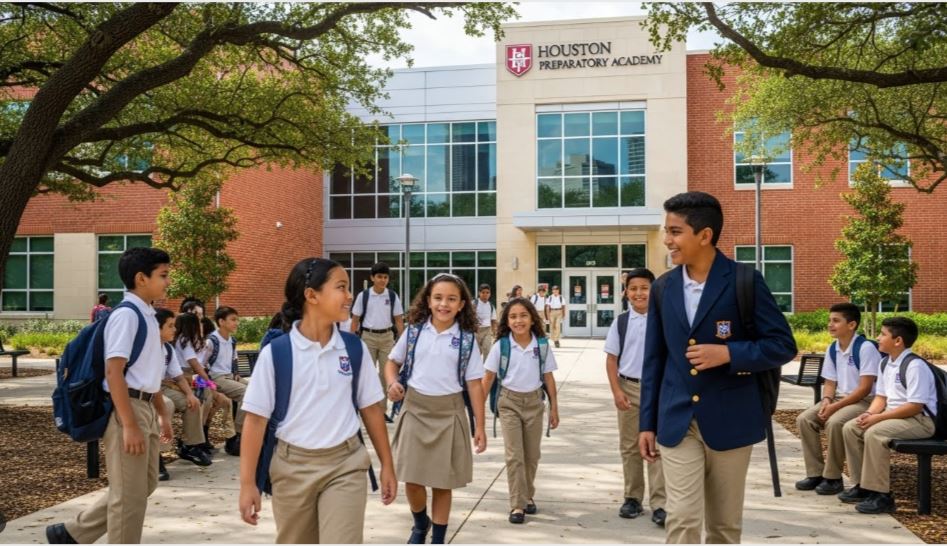
Texas Education Freedom Accounts aim to expand school choice but raise concerns over equity, oversight and rising costs
Families across Texas will soon be able to apply for the state’s new $1 billion school voucher program, with applications opening on February 4. The initiative, officially called Texas Education Freedom Accounts (TEFA), represents a major shift in how public education funds can be used.
Details of the program were released by state officials in December. Under TEFA, taxpayer-funded education dollars will be placed into education savings accounts, allowing families to spend those funds on educational options outside the public school system.
Most families who qualify will receive approximately $10,000 per student per year, which equals about 85 percent of the state’s per-student public school funding. Homeschooled students will be eligible for $2,000 annually, while students with disabilities may receive up to $30,000, depending on their individual needs.
The program is technically open to all students. However, if demand exceeds available funding, recipients will be chosen through a lottery system. Priority will first be given to students with disabilities from families earning up to roughly $240,000 a year for a household of four. Next will be families earning around twice the federal poverty level, about $60,000 annually, followed by families earning between $60,000 and $240,000. Families with incomes above that threshold will have the lowest priority.
Funds from the program can be used for a wide range of education-related expenses, including private school tuition, uniforms, meals, transportation, approved online or out-of-state programs, and pre-kindergarten services. Payments cannot be made to family members. While the state has not finalized the full rollout timeline, officials expect some families to receive funds as early as July.
Governor Greg Abbott signed the voucher program into law in May through Senate Bill 2, after previous attempts failed in earlier legislative sessions. Supporters argue the program empowers parents by giving them more control over their children’s education.

Abbott has said the program ends the idea that families must accept only the school assigned by the government and instead allows parents to choose what they believe is best for their child.
Critics, however, warn that the program will divert money from public schools that are already struggling. State Representative James Talarico said the consequences would become clear when neighborhood schools begin to close due to declining resources.
In December, Abbott also announced plans to opt Texas into a federal tax-credit scholarship program set to begin in January 2027. Unlike direct vouchers, this program would allow taxpayers to receive credits for donations to approved scholarship organizations.
Who is likely to benefit
School voucher programs have a long and controversial history in the United States. While early forms appeared in the late 1800s, large-scale use expanded after the 1954 Brown v. Board of Education ruling, when some Southern states used vouchers to resist school integration. Modern voucher programs gained traction in the 1990s, often promoted as tools to expand parental choice and support low-income families or students with disabilities.
Today, more than 30 states and Washington, D.C., operate some form of voucher program. In recent years, many states have moved toward universal programs, with education savings accounts becoming the most flexible and far-reaching option.
Although these programs are often marketed as a way to help low-income families access private schools, state financial projections suggest most TEFA applicants may already be enrolled in private schools. Texas estimates that about 87 percent of applicants will come from private school families, effectively turning the program into a financial benefit for wealthier households.
This trend mirrors findings in other states. North Carolina reported that nearly 90 percent of recipients under its universal voucher program were already attending private schools. Similar patterns have been documented in states such as Arizona, Arkansas, Florida, Indiana, Iowa, Missouri, New Hampshire, Ohio and Wisconsin, with Arkansas reporting that 95 percent of voucher recipients had never attended public school.
A national study released in September found that voucher-style programs increased private school enrollment by only 3 to 4 percent, indicating that most benefits went to families already using private education.
Experts say program design plays a role. Texas does not impose strict income limits, instead using income tiers to prioritize applicants. This allows a significant portion of funds to go to families earning well above the poverty line.
Another challenge is cost. Vouchers often do not cover the full price of private school tuition, limiting access for lower-income families. Lack of information also remains a barrier. Surveys show that more than half of Texas parents are still unaware of the program, and only a small percentage say they are very familiar with how it works.
Researchers emphasize that public education campaigns will be critical so families can make informed decisions.
Do vouchers improve outcomes
There is ongoing debate over whether students who move from public to private schools using vouchers see better academic results. Research suggests that students do not consistently perform better in private school settings and that many eventually return to public schools.
Measuring outcomes in Texas may be especially difficult because private schools participating in TEFA are not required to administer the same standardized tests as public schools. In states like Indiana, where both sectors use the same assessments, data shows private school students often perform the same as or worse than their public school peers.
Oversight and transparency are also major concerns. While hundreds of schools and education service providers have already applied to participate, the state has not yet released details on how these institutions will be vetted or monitored for quality.
Pressure on public schools
Opponents argue that voucher programs weaken public education by reducing enrollment-based funding. Although Texas lawmakers approved an $8.5 billion boost for public schools this year, funding remains closely tied to attendance.
When students leave, districts lose funding, but many costs remain fixed, including building maintenance, utilities and staffing. As a result, fewer dollars are left to support students who remain in public schools.
Large districts like Houston ISD are especially vulnerable. Built to serve more than 200,000 students, the district’s current enrollment is closer to 170,000, and the voucher program could accelerate further declines.
Cost concerns extend beyond individual districts. Although TEFA is starting with a $1 billion budget, projections suggest the program could grow significantly. Estimates indicate costs could reach nearly $8 billion by the 2030–31 school year.
Other states have faced similar issues. Arizona’s voucher program was initially projected to cost $65 million but has grown to more than $700 million, contributing to serious budget shortfalls.
Education researchers warn that without strong transparency and oversight, costs could spiral quickly. They argue that clear reporting and public accountability will be essential to ensure the program does not undermine other critical state priorities.
As Texas prepares to roll out one of the largest voucher programs in the country, supporters and critics alike will be watching closely to see who benefits, how costs evolve, and what the long-term impact will be on public education.