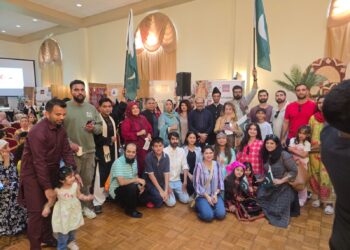
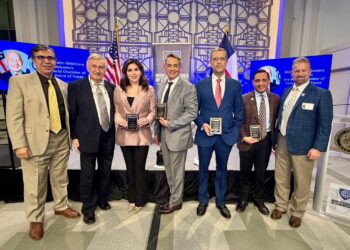
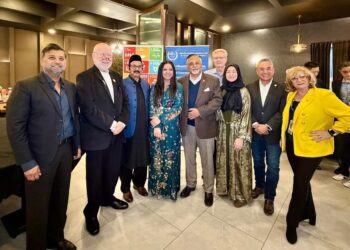
Mawlana Hazar Imam arrived in Houston earlier today, marking his first official visit to the United States as the 50th hereditary Imam of the Shia Ismaili Muslim community. Accompanied by Prince Amyn, Prince Hussain, and Prince Aly Muhammad, the visit holds great historical and spiritual importance for the global Ismaili community.
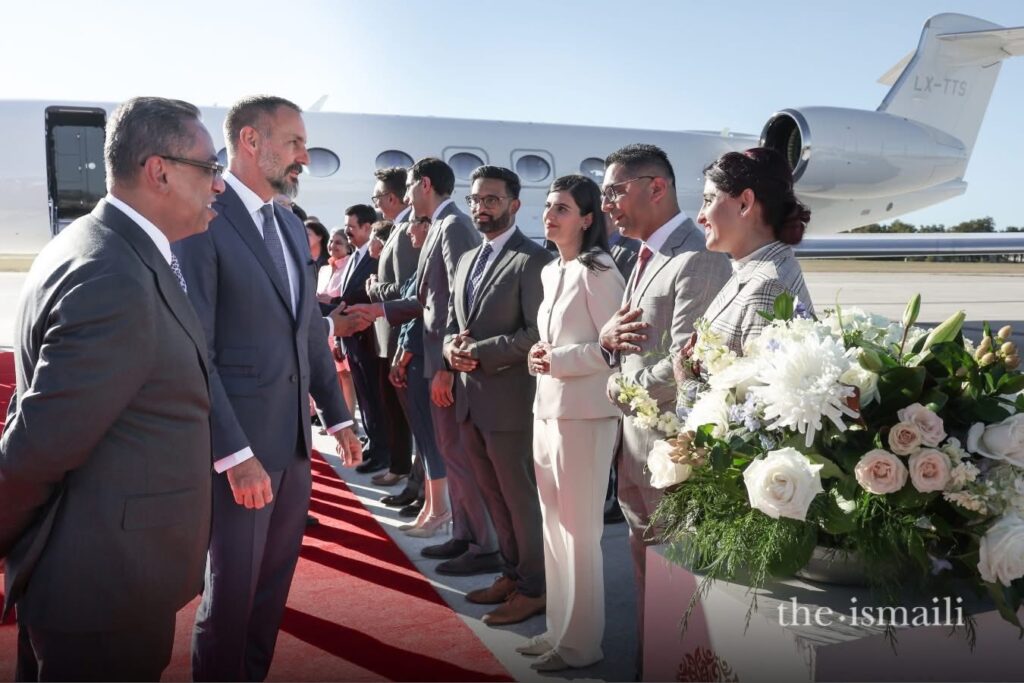
Upon landing in Sugar Land, Hazar Imam was warmly welcomed by Carol McCutcheon, Mayor of Sugar Land; Rick Miller, Mayor Pro Tem; Al-Karim Alidina, President of the Ismaili Council for the USA; and a delegation of senior Jamati leaders. The ceremony included an honor guard and a musical performance by talented youth from across the region, who presented the U.S. National Anthem and the Nashid al-Imamah. In a symbolic gesture of respect and friendship, Mayor McCutcheon presented Hazar Imam with the Key to the City of Sugar Land.
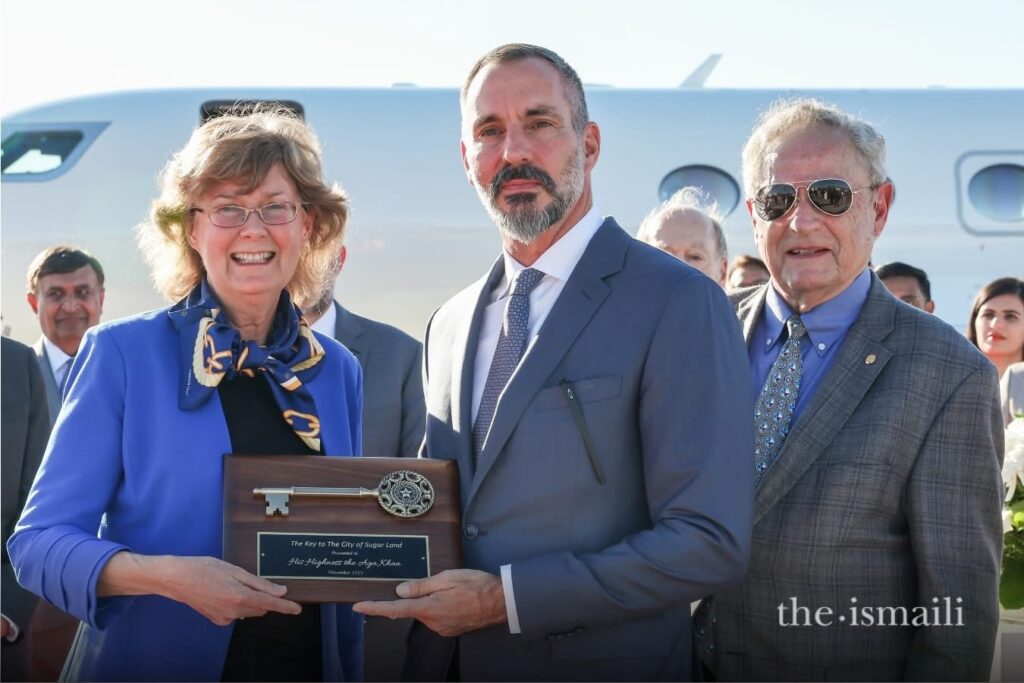
Later in the afternoon, Hazar Imam met with Houston Mayor John Whitmire at City Hall. Mayor Whitmire also conferred upon him the Key to the City and announced that he would serve as Chief Guest at the official opening ceremony of the Ismaili Center Houston, scheduled for November 6.
Inauguration of the Ismaili Center Houston
The inauguration ceremony of the Ismaili Center Houston will be broadcast live on The Ismaili TV, beginning at 10:15 AM local time. The center is envisioned as a space dedicated to cultural exchange, interfaith dialogue, and community service.

Overlooking Buffalo Bayou, the Ismaili Center stands as the first of its kind in the United States and the seventh worldwide. Nearly two decades in the making, it serves as an ambassadorial and spiritual landmark for the Shia Ismaili community. The 150,000-square-foot complex will open its doors to the public in December, with community welcome events planned for December 12 and 13.
A Monument to Diversity and Dialogue
At the Thursday morning ceremony, Houston Mayor John Whitmire stood alongside His Highness Prince Rahim Aga Khan V, the spiritual leader of the Shia Ismaili Muslims. “The City of Houston is proud to welcome the Ismaili Center — a place where people of all backgrounds can come together in dialogue, understanding, and learning,” said Whitmire. “It stands as a monument along the Allen Parkway corridor and a beacon of light that embodies Houston’s diversity, compassion, and community spirit.”

The five-story center spans 11 acres at the corner of Allen Parkway and Montrose Boulevard, near Buffalo Bayou Park. It features extensive gardens and courtyards, symbolizing openness and unity.
A Vision of Unity and Pluralism
In his remarks, Aga Khan V emphasized the Ismaili community’s long-standing commitment to pluralism and social progress. “The relationships between Ismailis and the communities where they live have always been built on understanding and shared purpose,” he said. “This building, while called an Ismaili Center, is not for Ismailis alone. It is open to all who seek knowledge, reflection, and dialogue.”
There are currently six other Ismaili Centers around the world — in Toronto and Vancouver, Dubai, Lisbon, Dushanbe, and London. Each serves as a bridge between faith, culture, and civic engagement.
Architectural Excellence and Community Spaces
Designed by renowned architect Farshid Moussavi, with landscape architecture by Thomas Woltz of Nelson Byrd Woltz, the Houston Ismaili Center features a blend of modern design and spiritual symbolism. The complex includes art exhibition spaces, a black box theater, a café, classrooms, and a prayer hall for the Ismaili community.
The center is expected to become a significant addition to Houston’s cultural landscape — a place of learning, reflection, and shared humanity that welcomes all.