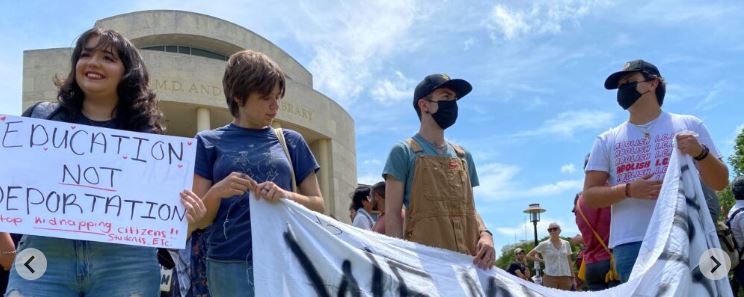
The recent immigration crackdowns and student visa revocations at the University of Houston have sent shockwaves through the international student community — particularly among students from Pakistan and across Asia. For these students, the fear of deportation is no longer hypothetical. It’s personal, immediate, and deeply tied to their right to speak, protest, and belong.
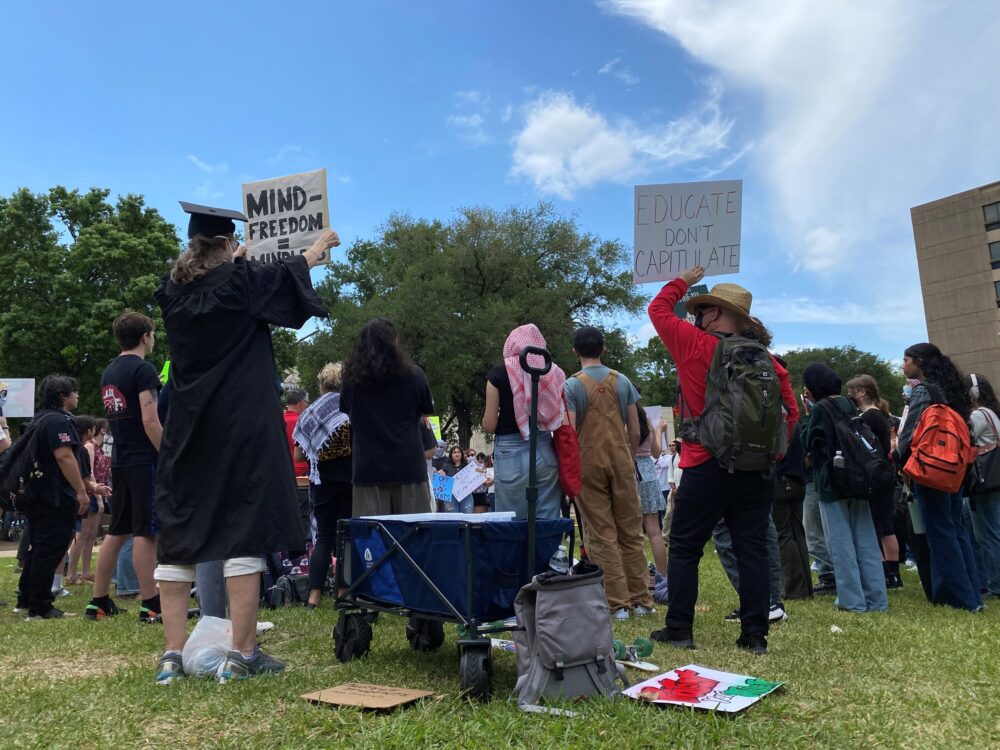
Many Pakistani and Asian students are on F-1 student visas — a legal status that now feels fragile in the face of increasing federal enforcement. The chilling effect is palpable. While students from these communities are often active participants in global justice movements, including pro-Palestinian solidarity efforts, many now feel silenced, surveilled, and unsafe.
As Francis, a UH graduate student, pointed out during Thursday’s protest, many international students are too afraid to protest publicly. “They want to be involved,” she said, “but they know what could happen if they’re seen.”
This sentiment is echoed throughout the Pakistani student community. There’s growing anxiety that speaking out, even peacefully, could lead to visa termination or worse — forced return to countries they may not have lived in for years. For many, this is a life-altering threat. Their education, their careers, and their futures are on the line.
Faculty members like Professor David McNally have spoken out about the human cost of these policies. “We’re cobbling together stories — students who’ve suddenly disappeared from class, whose visas were revoked without warning,” he said. These are not isolated incidents; they are part of a disturbing pattern.
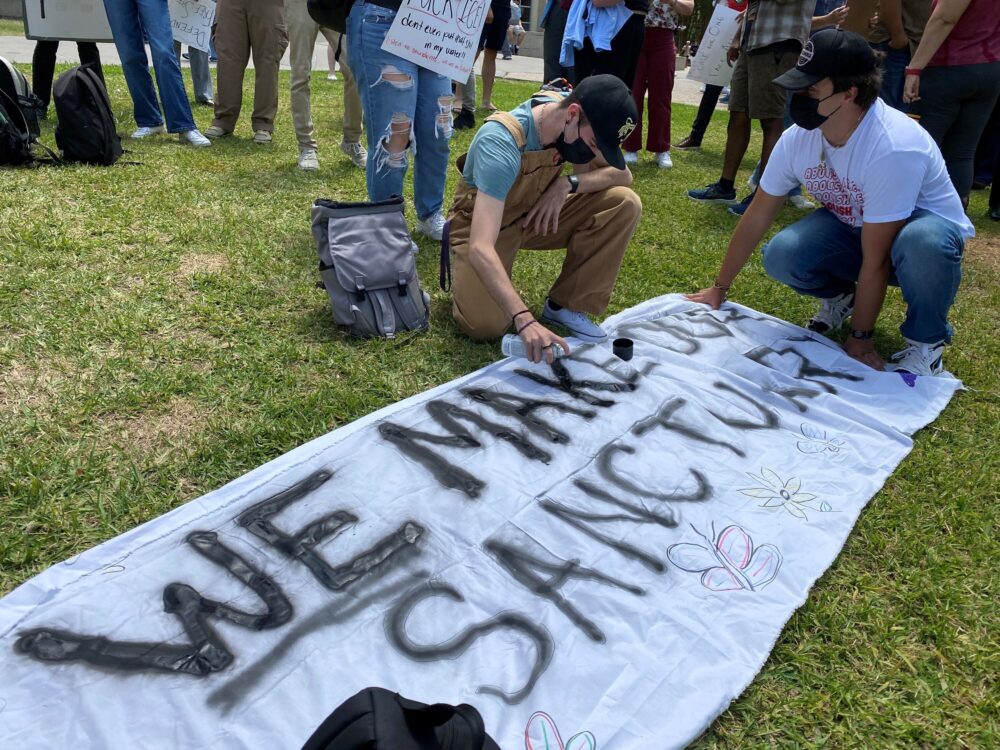
The call for sanctuary campuses — safe spaces where students can organize and express themselves without fear of immigration enforcement — has taken on new urgency. For Pakistani and Asian students, this is about more than legal protections. It’s about dignity, inclusion, and the right to exist freely in academic spaces.
These students are not outsiders; they are researchers, teaching assistants, leaders of cultural organizations, and vital contributors to campus life. Their forced silence is a loss for the entire academic community.
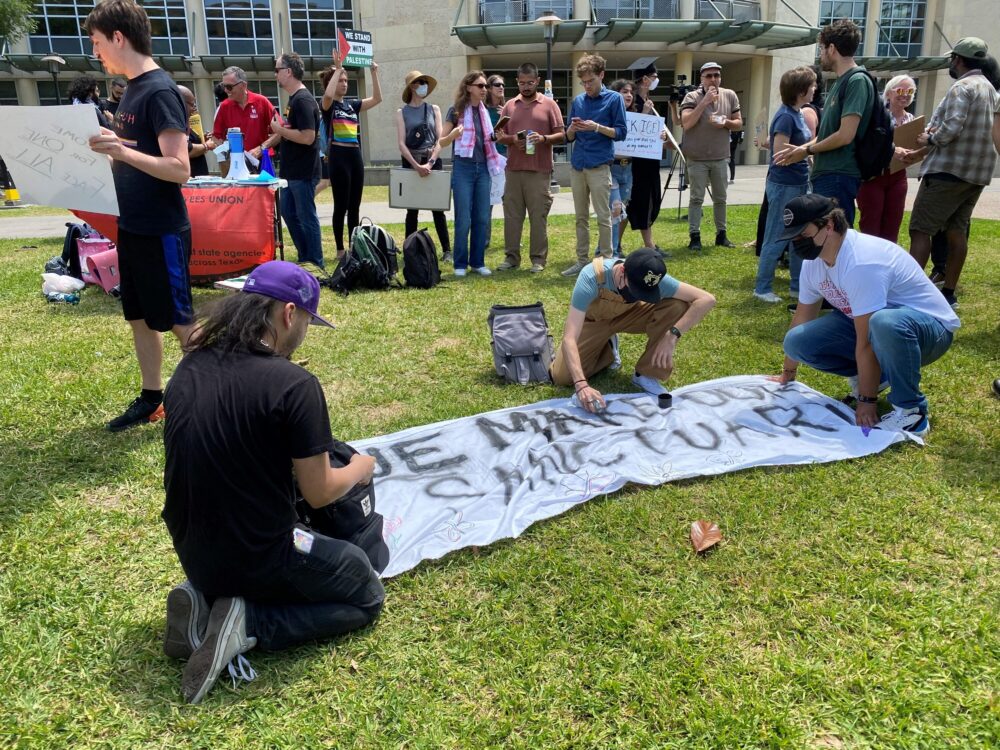
The protests at the University of Houston are part of a larger national movement to protect international students, academic freedom, and the right to dissent. But within this movement, the voices of Pakistani and Asian students — often marginalized even within activism spaces — must be amplified.
Because this isn’t just about visas. It’s about whose voices are allowed to be heard.