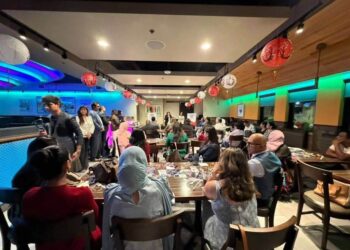
Thousands of Muslims from the Greater Houston area gathered at Sugar Land Town Square for the region’s largest open-air iftar. An estimated 4,000 to 6,000 people assembled in front of Sugar Land City Hall to break their fast, participate in prayers, and celebrate Ramadan in a spirit of unity and community.

Rehan Siddiqi Promotes Unity and Peace
Local radio host and event organizer Rehan Siddiqi spearheaded the gathering, emphasizing the importance of togetherness among Muslims. Attendees represented a diverse range of backgrounds, with many hailing from Pakistan, Lebanon, Jordan, Iraq, and other Islamic countries.
“The message of this iftar is love, unity, and brotherhood from our community to everyone,” said Siddiqi. “Hosting an iftar at this venue during Ramadan was a dream—an opportunity to showcase Islam and our community’s values.”
A Historic Iftar in a Diverse Neighborhood
According to Siddiqi, this was the first time such a large number of Houston-area Muslims had gathered for an iftar at Sugar Land Town Square. The event was particularly meaningful as it took place in one of Houston’s most diverse communities, highlighting the city’s multicultural spirit.
Sunset, Adhan, and a Moment of Reflection
As the sun set and the call to prayer (Azan) echoed through the square, the gathering took on an even more profound significance. Children playing soccer and other games, along with adults engaged in conversation, all paused to break their fast and perform their prayers, embracing the spiritual essence of Ramadan.

Community Support and Charity Initiatives
Renowned local restaurants Karahi Boys and La Pasha Lounge & Grill contributed thousands of meal boxes to feed attendees. Additionally, Rehan Siddiqi and the event organizers collected toys to distribute to refugee children in celebration of Eid al-Fitr.
Passing Down Traditions to the Next Generation
Yasir Farooqi, a longtime Sugar Land resident who immigrated from Pakistan two decades ago, underscored the importance of such gatherings in preserving cultural heritage.
“It is essential to bring our children to events like this so they can connect with their traditions and values,” Farooqi said. “The next generation must understand and carry forward these cultural and religious practices.”