A Spring Branch homeowner says years of complaints went nowhere until his case received outside attention. His experience offers a lesson for Houston families facing recurring drainage and flooding problems.
For Houston homeowners, a heavy rainstorm can mean much more than a wet driveway.
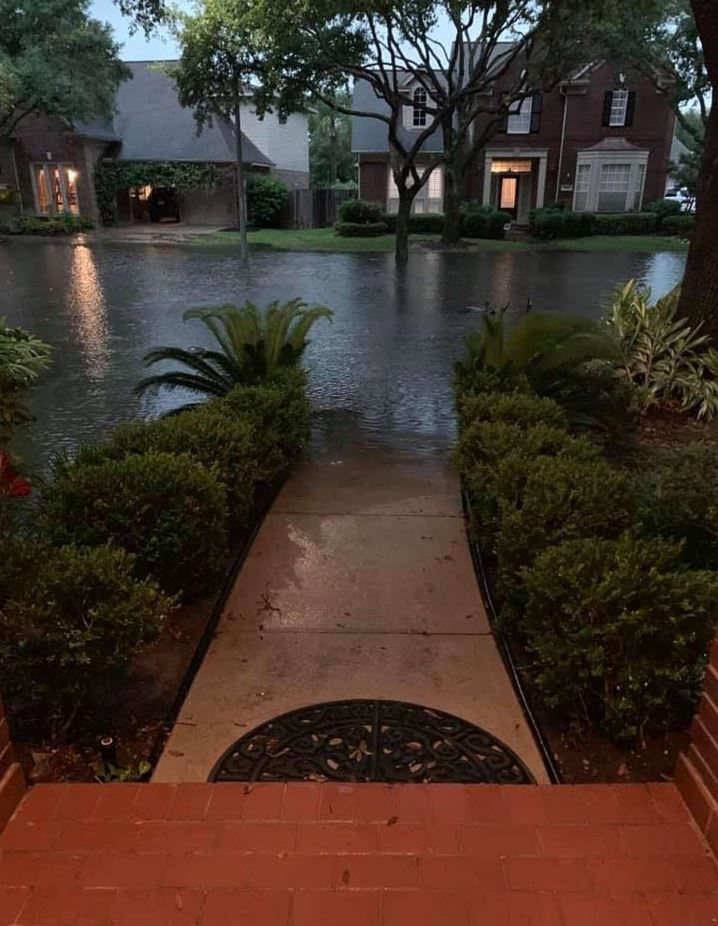
For some families, it can mean watching water collect outside their homes, checking whether drains are overflowing, moving valuables to higher ground and wondering whether the next downpour will send water inside.
That was the reality for Paul Braddock, a homeowner in Houston’s Spring Branch area.
Braddock lives on the 2200 block of Bauer Drive, where he had been dealing with flooding problems connected to irrigation and drainage issues. According to KPRC 2’s 2 Helps You, he spent years trying to get the problem addressed.
Eventually, he took matters into his own hands.
He built a wall and installed pumps to help protect his property from flooding. But those measures addressed the immediate threat to his home rather than the underlying drainage problem.
Then came the turning point.
When the problem finally got attention
KPRC 2’s 2 Helps You first reported on Braddock’s situation in July. After the station began pressing Houston officials about the case, the city moved forward with improvements.
By the September follow-up, Braddock said major changes had been made along his street.
“Everything on both sides of the street are new and they are much larger,” he told KPRC.
For a homeowner who had spent years worrying about heavy rain, the change was significant.
Braddock said his expectation now is that he can live more comfortably without worrying that every major rainfall will flood his home. He also credited the investigation with helping bring attention to the problem, saying he had been unable to get the issue resolved for about two and a half years before the intervention.
The city also added a parking lot near a nearby park, according to KPRC.
The bigger lesson for Houston homeowners
Braddock’s story is not a guarantee that every drainage complaint will receive the same response.
But it highlights something important about living in Houston: when flooding keeps happening, homeowners need a record of the problem.
Houston’s own public-works information identifies drainage and stormwater management as major infrastructure responsibilities, while city flood-recovery documents note that inadequate or aging drainage infrastructure has contributed to flooding in some neighborhoods.
For residents, that means a recurring flooding problem should not simply become something they learn to live with.
If water repeatedly collects at the same location, document it.
Take photographs and videos during and after significant rainfall. Record the date, approximate time and location. If water enters your property, document the damage before cleaning up, where it is safe to do so.
And when contacting the city, keep the 311 service-request number and copies of your communications.
Houston 311 is available 24 hours a day, seven days a week, and residents can submit and track service requests. The city says residents can call 311 or 713-837-0311 and can also submit requests online.
That paper trail can become important when a problem continues over months or years.
A lesson especially worth knowing for Pakistani-American families
For many Pakistani-American families in the Houston area, buying a home is one of the biggest financial decisions they will make after moving to the United States.
That makes understanding Houston’s flood and drainage systems more than a neighborhood issue. It is part of protecting a major family investment.
Families who are relatively new to Houston may also be more accustomed to dealing directly with landlords, builders, contractors or local community contacts when something goes wrong. Houston’s municipal system works differently: knowing which agency handles a problem, how to file a 311 request and how to track that request can make a real difference.
The lesson from Braddock’s experience is not simply to wait for someone else to solve the problem.
It is to document, report, follow up and understand the system.
Five things Houston homeowners can do
1. Document recurring flooding
Take photos and videos during heavy rain. Show where the water is coming from, how high it rises and how it affects the street, driveway or property.
2. Keep every 311 case number
Don’t rely only on a phone conversation. Save the case number, date, description and any follow-up correspondence. Houston’s 311 system allows residents to search service requests and check case status.
3. Build a simple flood file
Keep photographs, videos, insurance information, repair bills and correspondence together. A cloud folder can be useful so the records are not lost if a computer or phone is damaged.
4. Don’t assume a flood map tells the whole story
Houston’s flood risk can depend on rainfall, drainage capacity, development, bayous and local conditions. City documents have noted that existing flood maps do not capture every aspect of urban flood risk.
5. Know when it is an emergency
A drainage complaint is generally a 311 matter. But a situation involving immediate danger to people should not wait for a service request. Houston’s guidance says emergencies should be reported to 911.
A practical reminder before the next major storm
Pakistani-American homeowners should consider having a simple family flood plan.
Know which roads around your home tend to flood. Keep important documents and medicines somewhere protected from water. Know where electrical shutoffs are located, if it is safe to access them, and make sure family members know what to do if water begins entering the house.
And perhaps most importantly, don’t wait until the water is at the front door to start preparing.
Braddock’s experience shows how frustrating a recurring infrastructure problem can become when it goes unresolved. It also shows why homeowners should make their concerns visible, keep records and continue following up through the appropriate channels.
For Houston families, including the city’s growing Pakistani-American community, flood readiness is not only about surviving the next storm. It is also about knowing how to protect your home, your records and your investment long before the rain begins.